Case study
Cooler with Built-In Speaker
A cooler with a built-in speaker, from a team reverse engineering assignment. I modeled the exterior of the speaker and the overall cooler design.
- Role
- Speaker exterior and overall cooler design
- Affiliation
- ME 1700, Fall 2025, team of four
- Tools
- SolidWorks
- Status
- Status: Designed in CAD
Problem and constraints
The brief was open ended: reverse engineer one item from a given set. We chose a speaker, reverse engineered it, and integrated it into a cooler, because people often bring both to the same places, such as a cookout or the beach. The result is a portable cooler with a built-in speaker.
Approach
We reverse engineered the speaker from online teardowns and collected its measurements and technical specs. This was not a physical teardown: we never took a speaker apart ourselves.
We also studied existing coolers on the market.
I modeled the exterior of the speaker and the overall cooler design. For the cooler, I was responsible for the parametric modeling of the main enclosure. I combined the best features of the coolers we studied into a hybrid unibody design. The goal for the geometry was maximum internal volume with a rigid outer shell.
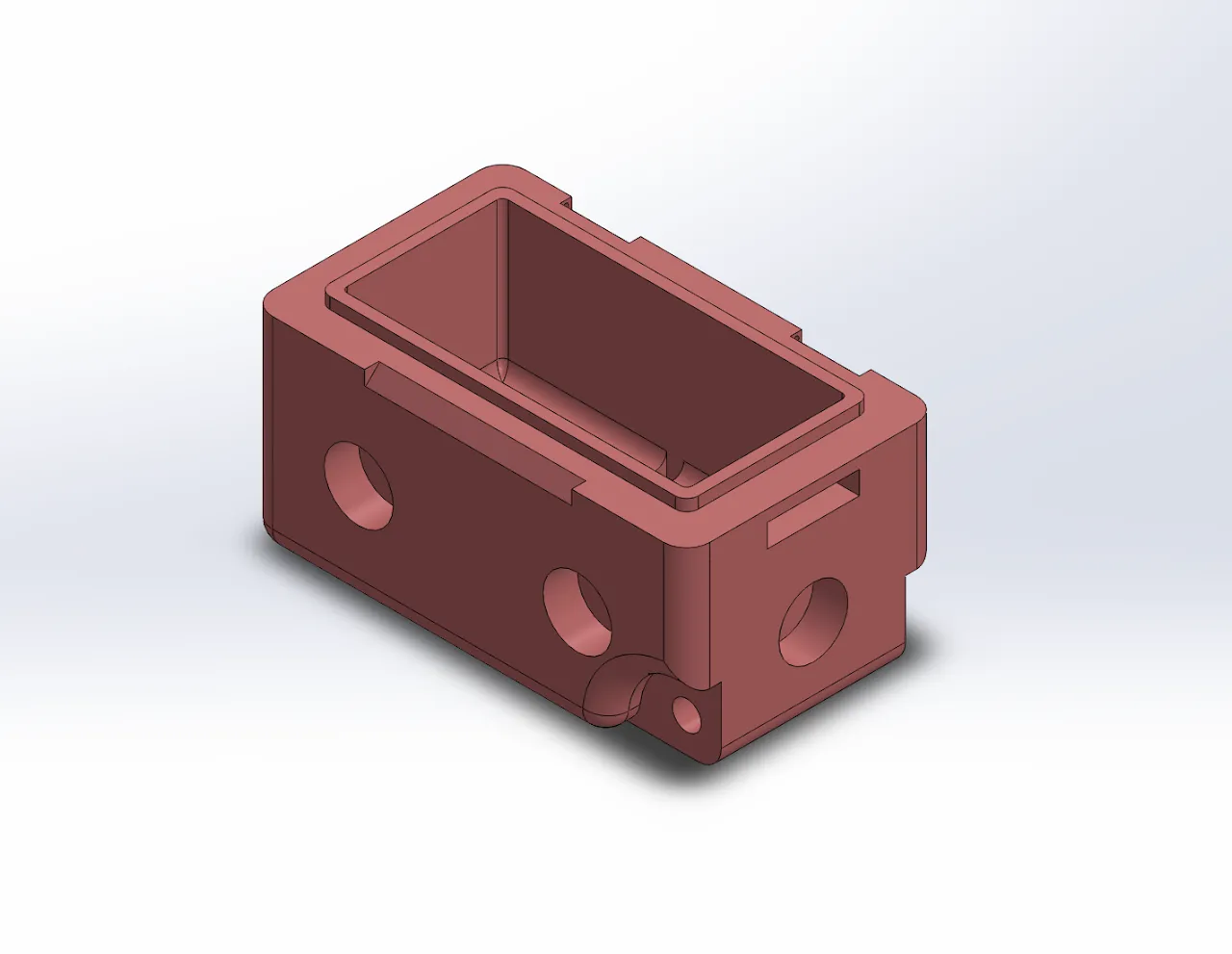
My other focus was the mechanical integration of the speaker units: their fit in the enclosure and interference clearance within the assembly. I created the master assembly in SolidWorks. The multi-component enclosure integrates the audio hardware with thermal isolation features and speaker mounting interfaces. I applied design-for-assembly principles across the enclosure, mounting hardware, and thermal barrier components to keep a serviceable fit in a compact form factor, and I produced engineering drawings for all custom parts.
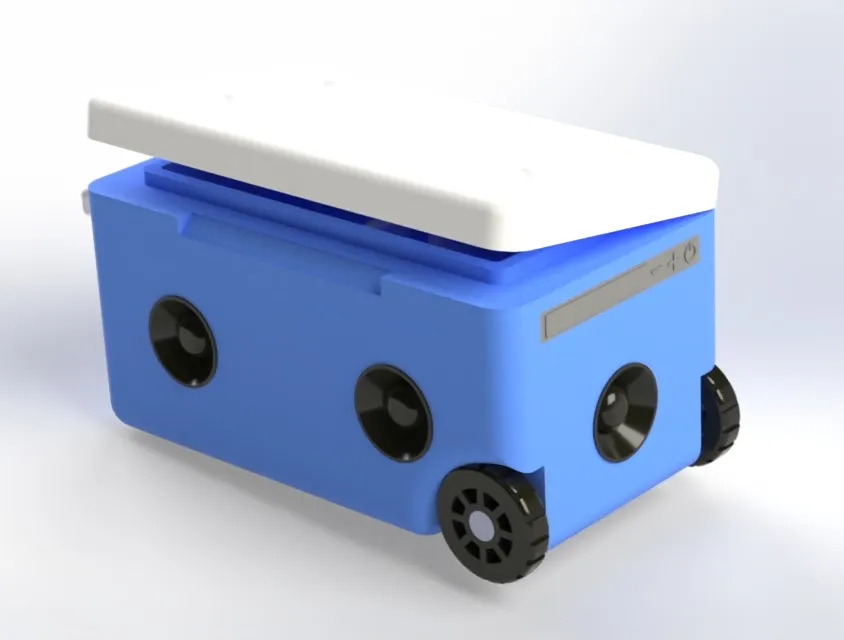
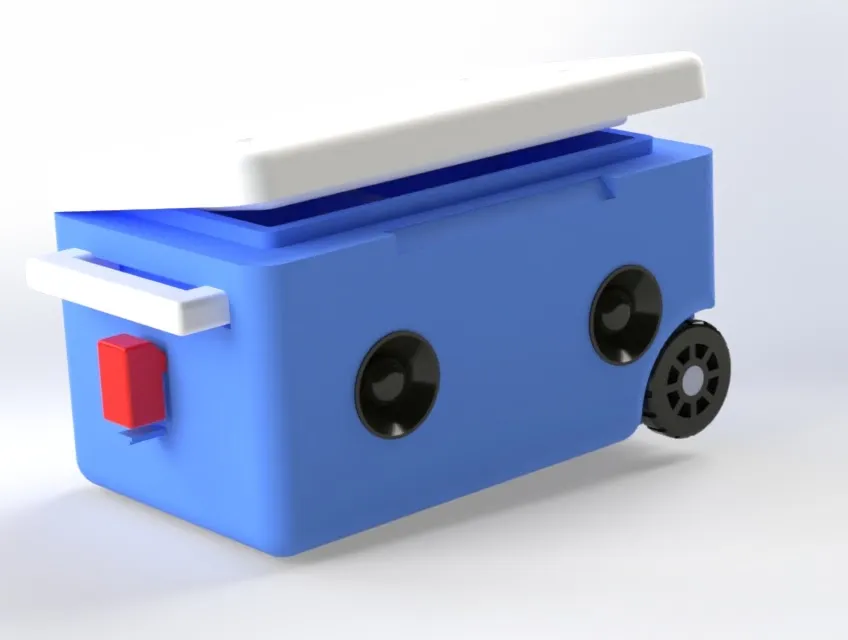
Result
The design exists only in CAD, as a SolidWorks assembly and concept renders. It was not physically built. The native CAD files are lost, and the three images on this page are the only remaining record, so there is no 3D model or downloadable CAD for this project.
What I’d do differently
I would tear down a real speaker to get a better understanding of it. I would also experiment with different unibody cooler designs, or consider solutions that are not unibody.